
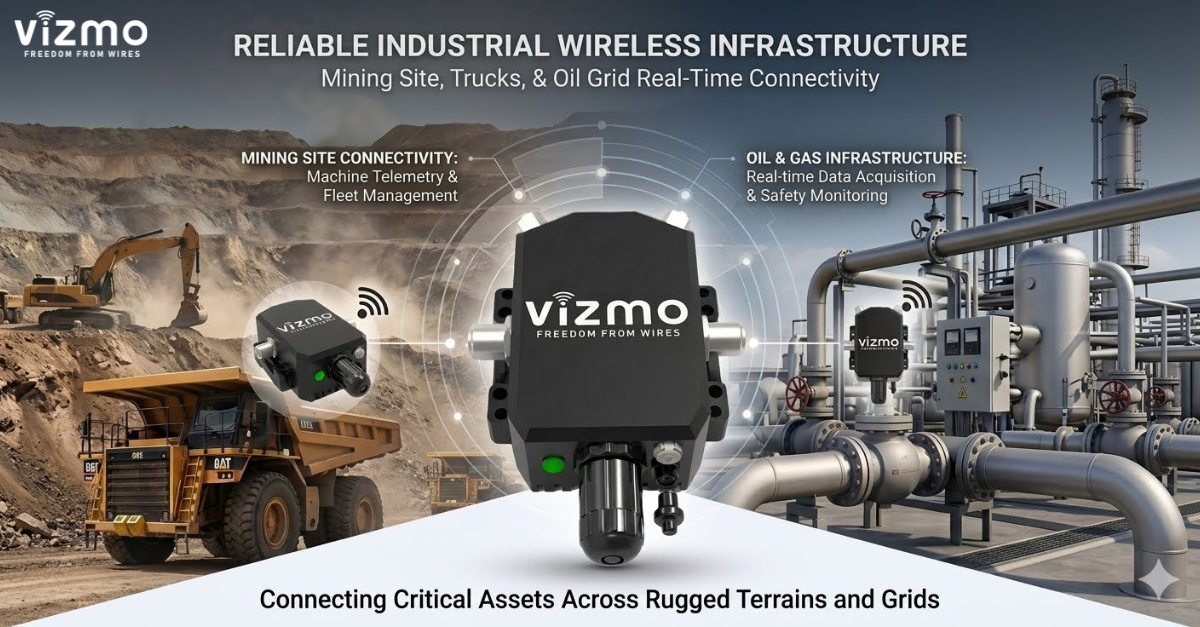
Designing Reliable Industrial Wireless Infrastructure for Mining, Oil & Gas, and Industrial Operations
Industrial Wireless Infrastructure is becoming essential for modern mining, oil & gas, and industrial operations. Industrial companies depend on reliable wireless communication to support industrial automation, industrial IoT, worker safety systems, telemetry, autonomous vehicles, and real-time operational monitoring across harsh industrial environments.
Mining sites, oil & gas facilities, refineries, ports, power plants, and heavy industrial campuses operate in extremely challenging conditions. Wireless infrastructure must deliver stable performance across metal-rich environments, underground operations, high RF interference zones, rugged outdoor deployments, and geographically large industrial sites.
Modern industrial wireless infrastructure is no longer limited to basic Wi-Fi connectivity. Industrial organizations now require low-latency wireless networking, industrial wireless mesh networks, embedded wireless systems, industrial Wi-Fi 6 infrastructure, and scalable industrial IoT communication platforms capable of supporting mission-critical operations.
Industrial sectors increasingly use:
- Industrial wireless communication systems
- Industrial IoT sensor networks
- Wireless telemetry systems
- Industrial wireless networking
- Industrial Wi-Fi 6 networks
- Wi-Fi HaLow industrial IoT connectivity
- Embedded wireless modules
- UAV and unmanned communication systems
- Wireless network solutions for mining operations
- Wireless communication oil & gas systems
However, building reliable industrial wireless infrastructure requires strong RF engineering, wireless network planning, antenna optimization, cybersecurity architecture, and rugged hardware design.
This article explains the engineering principles behind designing industrial wireless infrastructure for mining, oil & gas, and industrial operations while exploring technologies such as industrial Wi-Fi 6, Wi-Fi HaLow, industrial wireless mesh networking, RF link planning, and embedded wireless modules.
What Is Industrial Wireless Infrastructure?
Industrial wireless infrastructure is a communication framework that enables reliable wireless connectivity between industrial equipment, machines, sensors, vehicles, operators, and control systems across industrial environments.
Industrial wireless infrastructure is designed specifically for:
- Harsh industrial environments
- Long-range communication
- Low-latency industrial applications
- Industrial IoT deployments
- Mission-critical operations
- Secure operational technology environments
- Autonomous and unmanned systems
Compared to enterprise networking, industrial wireless infrastructure requires significantly higher reliability, stronger RF performance, ruggedized hardware, and better interference management.
Modern industrial wireless infrastructure improves operational visibility, scalability, automation efficiency, and network reliability across industrial operations.
Why Industrial Wireless Infrastructure Matters in Mining and Oil & Gas
Mining and oil & gas facilities operate continuously and depend on real-time communication between industrial assets, field operators, autonomous systems, and centralized monitoring platforms.
Unstable wireless communication can directly affect:
- Production uptime
- Worker safety
- Autonomous operations
- Industrial automation
- Remote monitoring systems
- Fleet coordination
- Environmental monitoring
- Predictive maintenance systems
Reliable industrial wireless infrastructure helps industrial organizations maintain operational continuity while improving safety, productivity, and real-time decision-making.
Industrial wireless infrastructure also supports industrial IoT deployments that require stable connectivity across remote and difficult operational environments.
Learn more about Vizmonet’s Mining Applications and Oil & Gas Applications.
Challenges in Industrial Wireless Infrastructure Design
Harsh Industrial Environments
Industrial wireless infrastructure must operate reliably in environments that include:
- Extreme temperatures
- Heavy dust exposure
- High humidity
- Corrosive conditions
- Underground tunnels
- Heavy vibration zones
- Metal-rich infrastructure
Industrial wireless hardware must support rugged deployment requirements while maintaining stable communication performance over long operational cycles.
RF Interference in Industrial Operations
Industrial sites contain multiple sources of RF interference including:
- Heavy machinery
- Motors and generators
- High-voltage systems
- Industrial automation equipment
- Dense wireless device environments
Strong RF engineering practices are essential for reliable industrial wireless infrastructure.
Key RF engineering activities include:
- RF link planning
- RF channel planning
- Link budget analysis
- Fade margin analysis
- Antenna optimization
- Wireless coverage analysis
- Interference reduction
Industrial RF planning directly affects network reliability, uptime, and wireless communication stability.
Large-Scale Industrial Connectivity
Mining operations and oil & gas infrastructure are often spread across geographically large areas.
Industrial wireless infrastructure must support:
- Long-range wireless communication
- Industrial wireless mesh networking
- Remote telemetry systems
- Industrial IoT sensor deployments
- Mobile industrial assets
- Autonomous vehicle communication
This is where technologies such as Wi-Fi HaLow and industrial wireless mesh networks become highly valuable.
Industrial Wireless Infrastructure Technologies for Industrial Operations
Industrial Wi-Fi 6 Infrastructure
Industrial Wi-Fi 6 technology improves wireless capacity, throughput, and low-latency performance in dense industrial environments.
Industrial Wi-Fi 6 infrastructure supports:
- Industrial automation systems
- High-density wireless communication
- Industrial video monitoring
- Autonomous vehicle communication
- Real-time industrial analytics
Industrial Wi-Fi 6 Mini PCIe modules are widely used in embedded industrial systems because they provide reliable connectivity, efficient spectrum utilization, and strong RF performance.
Industrial Wi-Fi 6 infrastructure is particularly useful in manufacturing facilities, industrial campuses, mining operations, and smart industrial environments where multiple wireless devices operate simultaneously.
Wi-Fi HaLow for Industrial IoT Connectivity
Wi-Fi HaLow (802.11ah) is becoming increasingly important for industrial IoT deployments that require long-range, low-power wireless communication.
Wi-Fi HaLow operates in sub-GHz frequency bands and provides better range and penetration compared to traditional Wi-Fi technologies.
Industrial applications include:
- Remote mining telemetry
- Pipeline monitoring
- Industrial asset tracking
- Smart sensor networks
- Industrial wireless mesh networking
- Remote infrastructure monitoring
Wi-Fi HaLow industrial IoT deployments are especially useful for geographically large industrial sites where traditional wireless technologies struggle with coverage limitations.
Learn more about Vizmonet Wi-Fi HaLow solutions and the AHSP1 Wi-Fi HaLow Module.
Embedded Wireless Modules
Industrial OEMs increasingly use embedded wireless modules to simplify product development and accelerate deployment timelines.
Embedded Wi-Fi modules and Mini PCIe wireless modules help manufacturers reduce integration complexity while improving RF reliability and regulatory compliance readiness.
Industrial embedded wireless systems are commonly used in:
- Industrial gateways
- Remote telemetry systems
- Industrial IoT platforms
- Mining communication systems
- Oil & gas monitoring equipment
- Wireless edge devices
- Autonomous industrial systems
Industrial-grade embedded wireless modules also help OEMs reduce time-to-market while improving scalability and long-term wireless performance.
RF Engineering Best Practices for Industrial Wireless Infrastructure
RF engineering is one of the most important elements of industrial wireless infrastructure design.
Industrial RF environments are highly complex due to:
- Metal reflections
- RF interference
- Heavy machinery
- Underground operations
- Environmental attenuation
- Dense wireless device deployments
Proper RF planning improves:
- Signal reliability
- Coverage consistency
- Wireless throughput
- Communication stability
- Network scalability
- Operational uptime
Industrial wireless network planning often includes:
- RF site surveys and RF link planning
- Wireless network architecture design
- Link budget analysis
- Fade margin analysis
- Antenna placement optimization
- Wireless channel planning
- Coverage mapping
- RF interference analysis
Industrial wireless infrastructure requires strong RF engineering and wireless network planning to maintain reliable communication across demanding industrial environments.
Rugged industrial wireless infrastructure is critical for harsh industrial deployments where downtime can directly impact operational productivity and worker safety.
Organizations designing industrial wireless networks can benefit from specialized RF and wireless engineering services, RF modeling, wireless network validation, and performance optimization.
Industry standards and wireless engineering best practices can also be referenced through the IEEE and the Wi-Fi Alliance.
Industrial Wireless Infrastructure for Autonomous and Unmanned Systems
Modern industrial operations increasingly deploy:
- UAV communication systems
- Autonomous mining vehicles
- Robotic inspection systems
- Unmanned industrial platforms
- Industrial telemetry systems
These systems require reliable industrial wireless infrastructure capable of supporting:
- Low-latency communication
- Real-time telemetry
- Long-range networking
- Industrial wireless mesh networks
- High-throughput video transmission
- Secure drone communication systems
Industrial wireless networking plays a critical role in enabling autonomous operations across mining, oil & gas, public safety, and industrial automation sectors.
Modern industrial wireless infrastructure supports industrial IoT and autonomous systems operating in complex industrial environments.
Cybersecurity in Industrial Wireless Infrastructure
Industrial wireless infrastructure must also address cybersecurity risks affecting operational technology environments.
Industrial wireless security strategies should include:
- WPA3 encryption
- Network segmentation
- Secure firmware management
- Industrial firewall integration
- Device authentication
- Encrypted telemetry communication
- Zero-trust security models
Secure industrial wireless infrastructure is critical for protecting industrial operations from network disruption, unauthorized access, and cyber threats.
As industrial IoT deployments continue expanding, cybersecurity is becoming a core requirement for industrial wireless communication systems.
For cybersecurity guidance and industry frameworks, organizations can reference the NIST Cybersecurity Framework.
Best Practices for Reliable Industrial Wireless Network Design
Industrial organizations should follow several best practices when designing industrial wireless infrastructure:
- Perform detailed RF site surveys before deployment
- Use industrial-grade wireless hardware
- Optimize antenna selection and placement
- Implement wireless redundancy and failover paths
- Use certified embedded wireless modules
- Deploy proactive network monitoring tools
- Design scalable wireless network architecture
- Prioritize industrial cybersecurity from the beginning
- Validate wireless performance under real operating conditions
- Plan for future industrial IoT expansion
Scalable industrial wireless infrastructure helps industrial operators reduce downtime while improving operational visibility and long-term network reliability.
Applications of Industrial Wireless Infrastructure
Mining Operations
Industrial wireless infrastructure supports:
- Autonomous haul trucks
- Worker safety systems
- Underground communication
- Remote telemetry
- Environmental monitoring
- Industrial automation systems
Reliable mining connectivity is essential for maintaining production uptime and improving operational efficiency.
Explore Vizmonet’s Mining Applications.
Oil & Gas Infrastructure
Oil & gas facilities use industrial wireless communication for:
- Pipeline monitoring
- Remote drilling operations
- Hazardous area connectivity
- Predictive maintenance systems
- Industrial IoT deployments
- Real-time operational monitoring
Wireless communication helps improve safety, infrastructure management, and operational visibility.
Explore Vizmonet’s Oil & Gas Applications.
Industrial Manufacturing
Industrial manufacturing environments rely on industrial wireless infrastructure for:
- Factory automation
- Industrial robotics
- AGV communication systems
- Wireless sensor networks
- Smart manufacturing systems
- Industrial edge computing
Industrial wireless networking enables greater operational flexibility and supports Industry 4.0 transformation initiatives.
Learn more about Industry 4.0 Applications and Heavy Construction Applications.
How Vizmonet Supports Industrial Wireless Infrastructure Development
Vizmonet works with OEMs, industrial technology companies, and system integrators developing advanced wireless communication solutions for industrial and mission-critical environments.
The company focuses on:
- Industrial wireless engineering
- RF engineering services
- Industrial Wi-Fi technologies
- Wi-Fi HaLow solutions
- Embedded wireless systems
- Mini PCIe wireless modules
- Industrial wireless communication systems
- Rugged wireless connectivity platforms
Vizmonet supports industries such as:
- Mining
- Oil & gas
- Industrial automation
- Industrial IoT
- Public safety
- UAV and unmanned systems
- Smart infrastructure
With growing demand for industrial wireless infrastructure, organizations increasingly require engineering partners capable of delivering scalable, rugged, and high-performance wireless communication systems.
Learn more about the Vizmonet Advantage, Technology Partners, and Wireless Connectivity Expertise.
Future of Industrial Wireless Infrastructure in Mining and Industrial IoT
Industrial wireless infrastructure will continue evolving as industrial operations become more connected, autonomous, and data-driven.
Future industrial wireless networks will increasingly support:
- Autonomous industrial operations
- AI-driven industrial analytics
- Industrial edge computing
- Smart mining infrastructure
- Real-time predictive maintenance
- Large-scale industrial IoT deployments
- Advanced industrial wireless mesh networking
Technologies such as industrial Wi-Fi 6, Wi-Fi HaLow, embedded wireless modules, and industrial wireless mesh infrastructure will play a major role in supporting future industrial connectivity requirements.
Reliable industrial wireless infrastructure will remain essential for operational efficiency, safety, scalability, and digital transformation across mining, oil & gas, and industrial sectors.
Conclusion
Reliable industrial wireless infrastructure has become a core requirement for modern mining, oil & gas, and industrial operations.
Industrial organizations depend on stable wireless communication to support automation, industrial IoT, autonomous systems, telemetry, predictive maintenance, and mission-critical operational visibility.
Designing industrial wireless infrastructure requires deep expertise in RF engineering, industrial wireless networking, embedded wireless systems, cybersecurity, industrial wireless communication, and rugged deployment architecture.
Technologies such as industrial Wi-Fi 6, Wi-Fi HaLow, industrial wireless mesh networking, and embedded wireless modules are helping industrial operators improve connectivity reliability across complex industrial environments.
As industrial operations continue moving toward connected and autonomous infrastructure, scalable and resilient industrial wireless infrastructure will remain essential for long-term operational efficiency, safety, and digital transformation.
To explore real-world deployment examples, visit our Case Studies, including the Rajant Radio Transceiver Module Deployment and Rajant ES1 Breadcrumb Case Study.
Need help with your next industrial wireless project? Contact Vizmonet to discuss industrial Wi-Fi, Wi-Fi HaLow, RF engineering, embedded wireless systems, and industrial connectivity solutions.
FAQ: Industrial Wireless Infrastructure
1. What is industrial wireless infrastructure?
Industrial wireless infrastructure is a communication framework that enables reliable wireless connectivity between industrial equipment, sensors, machines, operators, and control systems. It supports industrial automation, industrial IoT, telemetry, and mission-critical communication across mining, oil & gas, manufacturing, and other industrial environments.
2. Why is industrial wireless infrastructure important for mining operations?
Mining operations rely on industrial wireless infrastructure to support autonomous vehicles, worker safety systems, underground communication, environmental monitoring, industrial automation, and real-time operational visibility. Reliable connectivity helps improve productivity, safety, and operational efficiency.
3. Which wireless technologies are commonly used in industrial environments?
Industrial environments commonly use technologies such as Industrial Wi-Fi 6, Wi-Fi HaLow (802.11ah), industrial wireless mesh networks, embedded wireless modules, private LTE/5G, and industrial IoT communication systems. The choice depends on range, bandwidth, latency, and deployment requirements.
4. How does Wi-Fi HaLow benefit industrial IoT deployments?
Wi-Fi HaLow provides long-range, low-power wireless communication using sub-GHz frequencies. It is well suited for industrial IoT applications such as remote monitoring, pipeline management, asset tracking, environmental sensing, and large-scale industrial infrastructure where traditional Wi-Fi coverage may be limited.
5. What factors should be considered when designing industrial wireless infrastructure?
Key considerations include RF engineering, wireless network planning, interference management, antenna placement, cybersecurity, network redundancy, environmental conditions, scalability, and the use of industrial-grade hardware. Proper planning helps ensure reliable and secure wireless communication in demanding industrial environments.