
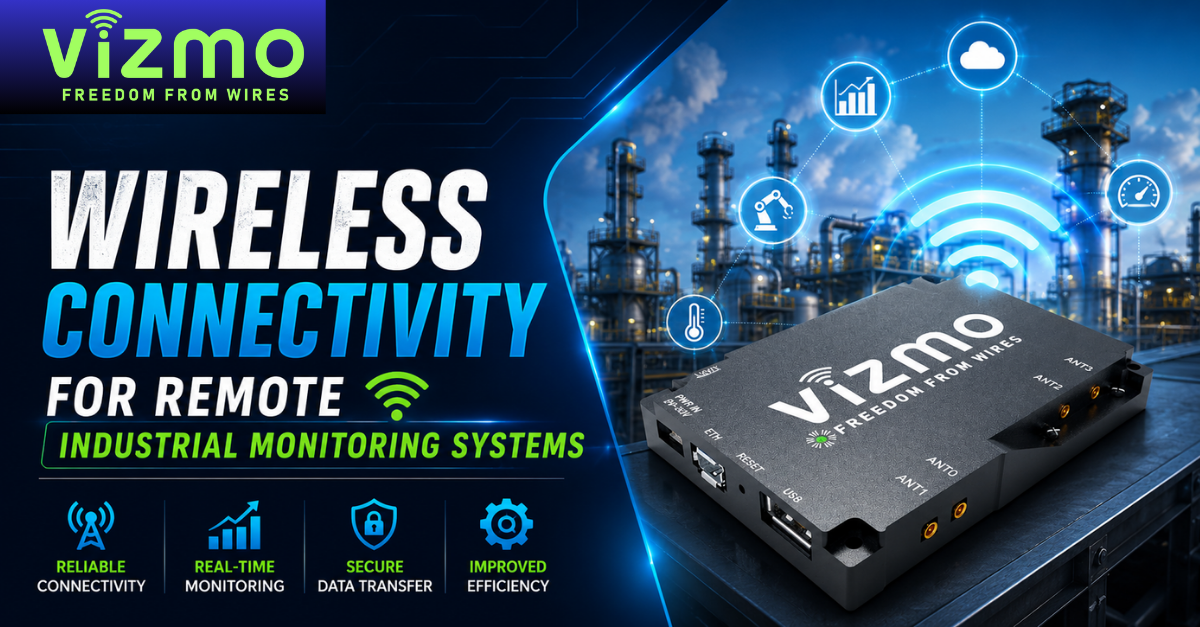
Wireless Connectivity for Remote Industrial Monitoring Systems
Industrial operations increasingly rely on real-time data to improve efficiency, safety, and productivity. Whether monitoring equipment in a manufacturing plant, tracking assets across utility networks, or supervising remote infrastructure, organizations need reliable communication between devices and control systems.
This is where industrial wireless connectivity plays a critical role.
Wireless connectivity enables industrial monitoring systems to collect, transmit, and analyze data without the limitations of traditional wired networks. As Industrial IoT adoption continues to grow, businesses are using wireless technologies to connect sensors, controllers, gateways, and cloud platforms across large and often challenging environments.
Organizations implementing Industrial IoT solutions should also consider choosing the right embedded wireless modules to ensure reliable connectivity and long-term scalability.
This article explores how industrial wireless connectivity supports remote monitoring systems, key technology considerations, deployment challenges, and future trends that Industrial OEMs should understand.
Why Remote Industrial Monitoring Matters
Remote monitoring allows organizations to observe equipment, processes, and environmental conditions without requiring personnel to be physically present at every location.
Common Monitoring Applications Include:
- Manufacturing equipment monitoring
- Utility infrastructure management
- Oil and gas operations
- Water treatment facilities
- Agricultural monitoring
- Smart warehouses
- Mining operations
- Renewable energy installations
Benefits of Remote Monitoring
- Reduce equipment downtime
- Improve operational efficiency
- Lower maintenance costs
- Increase worker safety
- Enable predictive maintenance
- Improve asset utilization
Reliable wireless communication is the foundation that enables all of these benefits.
The Role of Industrial Wireless Connectivity
Industrial wireless connectivity creates the communication backbone that links field devices to monitoring platforms.
A typical remote monitoring system consists of sensors, embedded wireless modules, gateways, edge computing devices, and cloud applications that work together to deliver real-time operational visibility.
Typical Data Flow
- Sensors collect operational data.
- Wireless modules securely transmit the information.
- Industrial gateways aggregate the data.
- Cloud or edge platforms analyze incoming information.
- Operators receive dashboards, alerts, and actionable insights.
Wireless communication eliminates extensive cabling while providing flexibility for expanding monitoring coverage.
Key Benefits
- Faster deployment
- Lower infrastructure costs
- Easy scalability
- Support for remote locations
- Simplified expansion
- Reduced installation complexity
Industrial OEMs designing connected products can further improve deployment efficiency through wireless product development that optimizes both hardware and connectivity architecture.
Key Wireless Technologies for Industrial Monitoring
Different industrial applications require different wireless technologies depending on communication range, power consumption, bandwidth, and deployment environment.
Wi-Fi
Traditional Wi-Fi offers high throughput and supports data-intensive industrial applications.
Best suited for:
- Factory automation
- Machine vision
- Video monitoring
- Indoor industrial facilities
- High-bandwidth applications
Its limitations include relatively shorter communication range and higher power consumption compared to low-power industrial wireless technologies.
Wi-Fi HaLow
Wi-Fi HaLow operates in sub-1 GHz frequencies and is specifically designed for long-range Industrial IoT applications.
Advantages include:
- Extended communication range
- Excellent obstacle penetration
- Lower power consumption
- Support for thousands of connected devices
Typical applications:
- Utility monitoring
- Smart agriculture
- Industrial campuses
- Environmental sensing
- Remote asset monitoring
To learn more about deployment planning, see our Industrial Wi-Fi HaLow Network Design guide.
For more information about the Wi-Fi HaLow standard, visit the Wi-Fi Alliance.
Cellular Connectivity
Cellular connectivity provides reliable wide-area communication for geographically distributed industrial assets. It is commonly used when remote equipment operates beyond the coverage of local wireless networks.
Common use cases include:
- Fleet management
- Pipeline monitoring
- Oil and gas facilities
- Remote energy sites
- Smart metering
Cellular networks offer broad coverage and dependable connectivity, although organizations should consider recurring network costs and carrier availability during system planning.
LPWAN Technologies
Low-Power Wide-Area Network (LPWAN) technologies are designed for battery-powered devices that transmit small amounts of data over long distances.
Typical applications include:
- Environmental monitoring
- Utility infrastructure
- Remote sensor networks
- Smart city deployments
LPWAN technologies prioritize long battery life over high data throughput, making them suitable for many Industrial IoT deployments.
Comparison of Wireless Technologies
| Technology | Range | Data Rate | Power Consumption | Typical Applications |
|---|---|---|---|---|
| Wi-Fi | Short | High | High | Factory automation, video monitoring |
| Wi-Fi HaLow | Long | Medium | Low | Industrial IoT, remote monitoring |
| Cellular | Very Long | Medium-High | Medium | Remote assets, fleet management |
| LPWAN | Very Long | Low | Very Low | Sensor networks, environmental monitoring |
Selecting the right wireless technology depends on communication range, power availability, bandwidth requirements, deployment environment, and long-term maintenance goals. Proper RF link planning and RF link budget calculations help engineers design reliable industrial wireless networks with optimal coverage and performance.
Challenges in Remote Industrial Monitoring Deployments
Industrial environments introduce several connectivity challenges that must be addressed during product design and deployment.
Harsh Environmental Conditions
Industrial facilities often contain physical obstacles and electrical interference that affect wireless performance.
Common environmental challenges include:
- Metal structures
- Concrete walls
- Electromagnetic interference
- Extreme temperatures
- Dust and moisture
Proper RF engineering helps improve signal reliability and communication performance in demanding industrial environments.
Coverage Requirements
Large industrial sites require wireless networks capable of maintaining reliable connectivity across long distances.
Examples include:
- Mining operations
- Utility substations
- Solar farms
- Oil and gas facilities
Long-range wireless technologies combined with optimized antenna design help maintain dependable communication across large industrial campuses. Proper planning using an industrial wireless infrastructure strategy further improves network reliability.
Power Constraints
Many remote monitoring devices operate on batteries for extended periods.
Engineers should balance:
- Communication reliability
- Transmission frequency
- Battery life
- Overall system performance
Selecting low-power wireless technologies can significantly increase operational lifetime while reducing maintenance requirements.
Security and Compliance
Industrial monitoring systems require strong cybersecurity measures to protect sensitive operational data.
Important security considerations include:
- Device authentication
- Encrypted communication
- Secure firmware updates
- Network segmentation
- Access control policies
Organizations should also plan for wireless product certification and compliance early in the development cycle to reduce delays during product commercialization. If products are intended for the U.S. market, understanding FCC certification requirements is equally important.
OEM Considerations When Designing Remote Monitoring Systems
Industrial OEMs should evaluate wireless connectivity requirements during the early stages of product development to reduce project risks and accelerate time to market.
Wireless Module Selection
Choosing the appropriate wireless module affects overall product performance, certification requirements, scalability, and long-term reliability.
- Performance requirements
- Certification readiness
- Development timelines
- Future scalability
Industrial-grade embedded wireless modules help simplify system integration while improving long-term reliability.
Antenna Design and RF Performance
Reliable wireless communication depends on effective RF system design.
- Antenna placement
- Signal propagation
- Interference mitigation
- Environmental optimization
Professional RF engineering services can maximize wireless coverage and minimize communication failures in industrial environments.
Regulatory Certification Planning
Wireless products typically require certifications before entering global markets.
- FCC
- CE
- IC
- Regional approvals
Early certification planning reduces redesign costs and accelerates product launches. Learn more about wireless product certification, testing, and compliance.
Manufacturing Readiness
Moving from prototype to production requires careful manufacturing planning.
- Supply chain management
- Component sourcing
- Production scalability
- Quality assurance
Learn how Vizmonet supports scalable production through its turnkey manufacturing services.
Industry Examples of Remote Monitoring Applications
Industrial wireless connectivity supports a wide range of remote monitoring applications across multiple industries. By enabling real-time data collection and communication, organizations can improve operational efficiency, reduce downtime, and make informed decisions.
Smart Manufacturing
Manufacturers use wireless sensors and Industrial IoT devices to monitor production equipment continuously.
Typical monitoring includes:
- Machine health monitoring
- Production performance
- Energy consumption
- Environmental conditions
Real-time visibility enables predictive maintenance, minimizes unexpected downtime, and improves overall equipment effectiveness (OEE).
Utility Infrastructure
Utility providers deploy wireless monitoring systems to manage distributed infrastructure efficiently.
- Power distribution equipment
- Water treatment facilities
- Gas distribution systems
- Smart metering
Industrial wireless connectivity enables centralized monitoring of geographically dispersed assets without extensive wired infrastructure.
Oil and Gas Operations
Oil and gas facilities rely on remote monitoring systems to improve operational safety and asset visibility across remote locations.
- Pipeline monitoring
- Tank level monitoring
- Equipment health monitoring
- Environmental monitoring
Long-range wireless communication technologies help maintain reliable connectivity across large operational sites. Learn more about industrial wireless networks for oil and gas operations.
Agriculture and Environmental Monitoring
Wireless monitoring systems provide real-time insights into environmental conditions and agricultural operations.
- Soil moisture monitoring
- Irrigation management
- Weather monitoring
- Environmental sensing
Remote monitoring helps improve resource utilization while supporting sustainable farming practices. Explore more agriculture applications enabled by industrial wireless connectivity.
Future Trends in Industrial Wireless Connectivity
As Industrial IoT continues to evolve, wireless connectivity technologies are becoming more intelligent, efficient, and scalable.
Growth of Wi-Fi HaLow
Wi-Fi HaLow continues to gain adoption for Industrial IoT applications because it combines long-range communication, low power consumption, and IP-based networking.
Discover how Wi-Fi HaLow frequency range and coverage supports next-generation industrial connectivity.
Edge Intelligence
More data processing is moving closer to industrial devices through edge computing.
Benefits include:
- Reduced latency
- Faster decision making
- Lower cloud bandwidth usage
- Improved operational responsiveness
AI-Driven Predictive Maintenance
Artificial Intelligence is transforming industrial maintenance by identifying equipment failures before they occur.
Combined with industrial wireless communication systems, AI enables predictive maintenance strategies that reduce downtime and improve equipment reliability.
Expansion of Industrial IoT Networks
Industrial organizations continue connecting more devices, sensors, and machines than ever before.
Future wireless networks must support:
- Higher device density
- Long-range communication
- Enhanced cybersecurity
- Scalable Industrial IoT deployments
How Vizmonet Supports Industrial OEMs
Developing reliable wireless products requires expertise in connectivity technologies, RF engineering, certification, and manufacturing.
Vizmonet supports Industrial OEMs throughout the complete product lifecycle with:
- Industrial-grade embedded wireless modules
- Wi-Fi HaLow connectivity solutions
- RF engineering and antenna optimization
- Wireless product development services
- Regulatory certification support
- Turnkey manufacturing services
- Industrial connectivity solution design
By combining engineering expertise with scalable manufacturing capabilities, Vizmonet helps Industrial OEMs accelerate product development while reducing technical and regulatory risks.
Conclusion
Reliable industrial wireless connectivity has become the backbone of modern remote industrial monitoring systems. It enables organizations to collect real-time operational data, improve asset visibility, reduce maintenance costs, and support predictive maintenance initiatives.
Selecting the right wireless technology, designing robust RF systems, and planning for compliance and manufacturing early in the product development process are essential for long-term success.
Whether you’re building a new Industrial IoT solution or upgrading an existing monitoring platform, partnering with experienced wireless technology specialists can significantly improve project outcomes.
Partner with Vizmonet
Looking to develop reliable remote industrial monitoring solutions?
Vizmonet provides industrial-grade embedded wireless modules, Wi-Fi HaLow solutions, RF engineering expertise, wireless product development, regulatory certification support, and turnkey manufacturing services to help Industrial OEMs bring connected products to market faster.Contact Vizmonet today to discuss your next industrial wireless connectivity project.
Explore our complete portfolio of industrial wireless products or learn more about our engineering and OEM services.